DTC Attribution Without Cookies: A Practical 2026 Approach
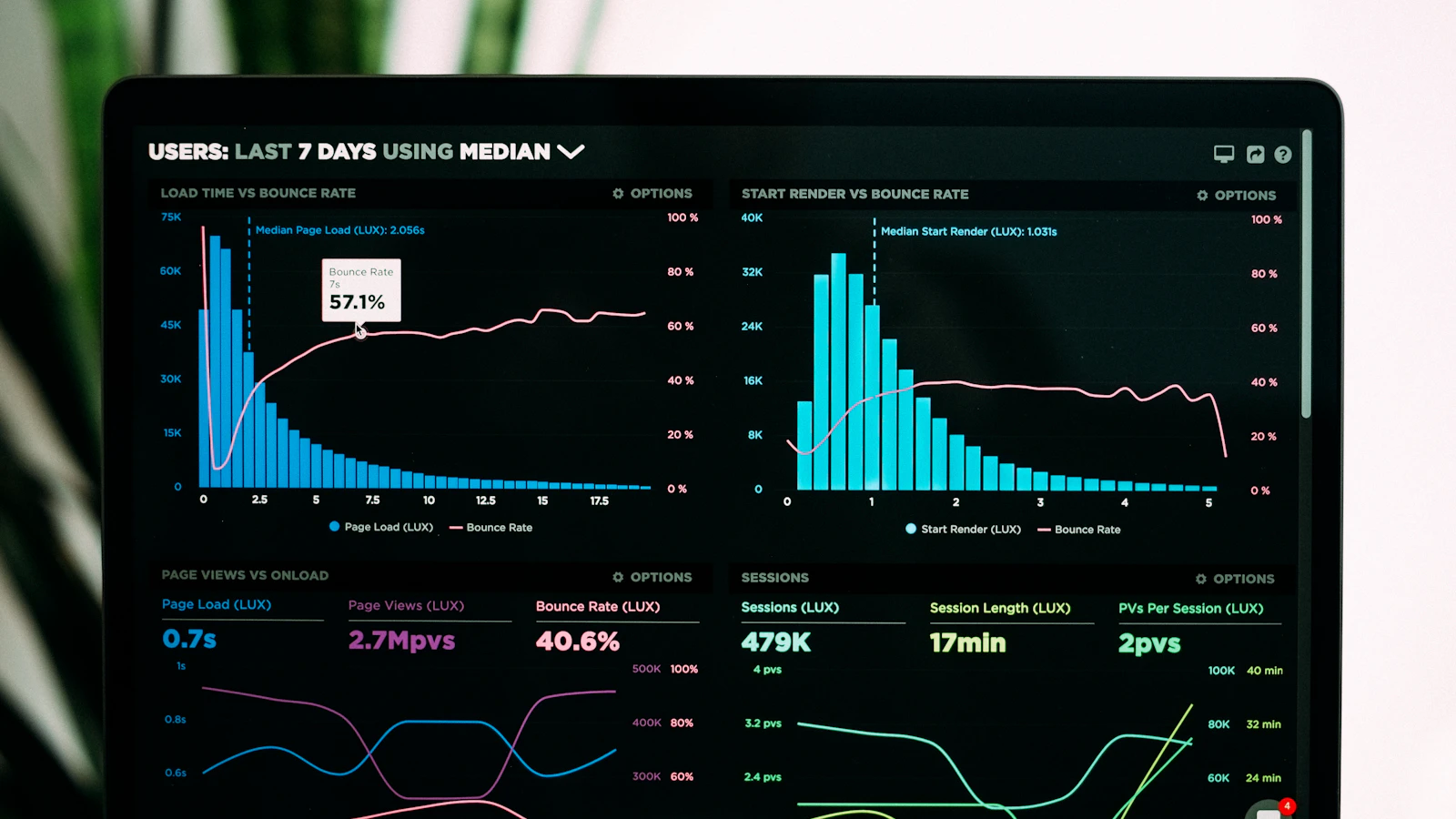
DTC attribution without cookies is the measurement problem every ecommerce brand is staring at in 2026. The short answer: third-party cookies are gone, but accurate attribution is not. Brands that rebuild on first-party data, server-side tracking, and (above USD 50K monthly spend) media mix modeling recover 70 to 90 percent of the signal they lost, and they make better budget decisions than they did in the cookie era.
Quick answer: Cookieless DTC attribution rests on three layers. First, first-party data: hashed email, phone, and order ID from checkout. Second, server-side tracking via Meta CAPI, Google Enhanced Conversions, and TikTok Events API. Third, a blended view (platform ROAS plus MER plus post-purchase survey) and, above USD 50K per month in spend, media mix modeling. This stack recovers most of the lost signal.
By Nand Patel, Founder, New Public Media.
What Is DTC Attribution and Why Cookie-Based Tracking No Longer Works
DTC attribution is the practice of assigning credit for an ecommerce sale to the marketing touches that produced it. For a decade, that credit was tracked through third-party cookies dropped by ad pixels in the browser. In 2026, those cookies either no longer exist or have been so heavily restricted that they cover under 20 percent of a typical DTC brand's traffic.
The shift is not theoretical. Safari blocked third-party cookies by default in 2020, Firefox followed shortly after, and Chrome finished its phased restrictions on third-party cookie usage through 2024 and 2025. Across our DTC client book, brands that did nothing saw platform-reported conversions drop 30 to 55 percent between 2022 and 2025, even when actual sales were flat or growing. The pixels were not lying, they were going blind.
Key takeaway: If your Meta or Google reported conversions look like they fell off a cliff in the last 24 months and your revenue did not, you do not have a sales problem. You have a measurement problem.
How Cookie Deprecation Changed the Measurement Landscape for DTC Brands
Cookie deprecation changed the DTC measurement landscape by breaking the link between a user's ad click and the eventual purchase, especially across devices and longer windows. Safari's Intelligent Tracking Prevention (ITP) caps client-side cookie lifetime at 7 days. Firefox's Enhanced Tracking Protection (ETP) blocks known trackers entirely. Chrome's restrictions on third-party cookies cover the largest browser share by far.
The practical impact on a typical DTC brand spending USD 30,000 per month: Meta in-platform attributed purchases under-report actual revenue by 25 to 45 percent on a 7-day click window. Google Ads under-reports by 15 to 30 percent on non-search campaigns. Cross-device journeys, which are 40 to 60 percent of DTC purchases, become nearly invisible without first-party signal.
Key takeaway: The measurement gap is real and it is platform-specific. Meta loses more signal than Google, social loses more than search, and any 30-day-plus consideration cycle loses more than 7-day impulse purchases.
First-Party Data: The Foundation of Accurate Attribution in 2026
First-party data is the foundation of accurate attribution in 2026 because it is data the customer gives directly to your brand, not data inferred from a browser cookie. The three signals that matter most for DTC: email address (collected at checkout, sign-up, or popup), phone number (checkout or SMS opt-in), and order ID (post-purchase). When hashed and sent server-side to ad platforms, these signals stitch ad clicks to purchases across devices and sessions.
A well-instrumented Shopify or WooCommerce store captures email on 60 to 80 percent of all visits with a proper popup and consent flow. That email becomes the join key across Meta, Google, Klaviyo, and your warehouse. We cover the collection mechanics in our first-party data collection guide. For most DTC brands, an email-captured visit is worth 4 to 6 times an anonymous one because it can be re-marketed, attributed, and modeled.
Key takeaway: Email captured at the right moment (post-add-to-cart, post-purchase, or via 10 percent off popup) is the single most valuable asset in cookieless attribution. Without it, every other layer underperforms.
Server-Side Tracking and Conversions API: Where to Start
Server-side tracking and Conversions API integrations are where the highest return on engineering time lives. Server-side means events fire from your server (or a server-side GTM container) directly to ad platforms, not from the user's browser where ad blockers and ITP can intercept them. The three integrations that move the needle for DTC, in order:
- Meta Conversions API (CAPI) with Advanced Matching, sending hashed email, phone, first name, last name, city, and zip alongside the purchase event. Setup docs are in the official Meta Conversions API documentation{:rel="noopener"}. Expect 15 to 30 percent more attributed purchases within 14 days of going live.
- Google Enhanced Conversions for web, which hashes user-provided data at checkout and matches it back to Google accounts. The official walkthrough is in the Google Enhanced Conversions guide{:rel="noopener"}. Our setup playbook is in Enhanced Conversions setup guide. Typical uplift: 5 to 15 percent on Search, 10 to 25 percent on PMax.
- TikTok Events API for any brand spending USD 5,000 per month plus on TikTok. The TikTok Events API documentation{:rel="noopener"} covers the schema. Uplift: 20 to 40 percent on attributed conversions in our book.
A server-side GTM container ties all three together and gives you one place to enforce consent. The implementation pattern is in our server-side tracking GTM setup guide.
Key takeaway: Server-side CAPI plus Enhanced Conversions plus TikTok Events API recovers 70 to 90 percent of the conversions lost to cookie deprecation. It is the single highest-ROI engineering work in cookieless attribution.
Which Attribution Models Work Best for DTC Without Third-Party Cookies
The attribution models that work best for DTC without third-party cookies are data-driven and time-decay at the platform level, and blended MER plus self-reported attribution at the brand level. Last-click is still the worst model for DTC and gets worse as cookies disappear, because it credits the final tap (often a branded search) and ignores everything that created demand.
Attribution Model Comparison for Cookieless DTC
| Model | How It Works | Strength | Weakness | Best Use |
|---|---|---|---|---|
| Last-click | 100 percent credit to final touch | Simple, available everywhere | Severely undervalues paid social and YouTube | Avoid as primary |
| Linear | Equal credit across all touches | Easy to explain | Treats brand awareness and bottom funnel the same | Internal sanity check |
| Time-decay | More credit to touches closer to conversion | Reasonable middle ground | Still needs decent path data | Smaller accounts |
| Data-driven | Algorithmic, based on actual conversion paths | Most accurate when signal is good | Needs volume, opaque math | Default for Google Ads |
| MMM (top-down) | Statistical model on aggregated spend vs revenue | No user data needed | Slow, needs 18+ months history | Spend above USD 50K/mo |
Key takeaway: Use data-driven attribution inside platforms, blended MER for board reporting, and self-reported survey for the truth about how customers actually found you. No single model is correct on its own.
Want this run on your account?
Free 30-minute audit. We walk through your accounts, tracking, and growth gaps with no pitch deck.
Media Mix Modeling for DTC: When It Makes Sense to Add This Layer
Media mix modeling (MMM) is a statistical technique that estimates each channel's contribution to total revenue using aggregated weekly spend and sales data, no user-level tracking required. For DTC brands, MMM makes sense when monthly paid media spend crosses roughly USD 50,000 (GBP 40,000, AUD 75,000) and you have at least 18 months of consistent weekly history.
Below that threshold, the math is too noisy and the tool cost (Recast at USD 4,000 plus per month, Lifesight from USD 2,000) outruns the lift. Above it, MMM becomes a credible answer to the "is my Meta spend actually working" question because it does not depend on cookies or pixels at all.
The right sequence: nail server-side tracking first, layer self-reported attribution next, add MMM only when spend justifies it.
Key takeaway: MMM is a USD 50K-plus per month tool. Below that, your time and money are better spent on CAPI, Enhanced Conversions, and a post-purchase survey.
If you want our team to design and instrument this stack for you end to end, book a free 30 minute attribution audit. We will walk through your pixels, server-side setup, and reporting in one call and tell you exactly where signal is leaking.
How to Measure Meta and TikTok Performance Without Browser Cookies
Measuring Meta and TikTok performance without browser cookies starts with platform-side enhancements and ends with a blended off-platform check. On Meta, enable Advanced Matching inside CAPI so every server event carries hashed email, phone, and name. Across our book, Advanced Matching alone recovers 20 to 35 percent of conversions that would otherwise be unattributed.
On TikTok, the equivalent is the enhanced Events API integration with user identifiers (hashed email and phone) on every Complete Payment event. Reported ROAS becomes meaningfully more stable within 7 to 14 days. Always read platform-reported ROAS alongside blended Marketing Efficiency Ratio (MER), which is total revenue divided by total ad spend across all channels. If platform ROAS is up but MER is flat, you are double-counting, not growing. If MER rises faster than platform ROAS, your tracking is undercounting and you can probably scale.
For DTC brands running paid social as the primary channel, we cover platform-specific buildouts on our Meta ads agency page.
Key takeaway: Platform-reported ROAS is the steering wheel. Blended MER is the speedometer. You need both, and they should move in the same direction.
Building a Practical Attribution Stack for DTC Brands Under $10M in Revenue
Building a practical attribution stack for DTC brands under USD 10M in revenue does not require a data team. It requires sequencing. The order below is what we implement for new clients in their first 30 to 45 days, in priority order:
- Audit current tracking. Confirm what is firing client-side vs server-side. Identify gaps in checkout events, refund events, and customer ID passthrough.
- Set up server-side GTM in a sub-domain container. This becomes the single forwarding point for all platform events.
- Enable Meta Conversions API with Advanced Matching. Hash email, phone, name, city, zip on every Purchase, AddToCart, and InitiateCheckout event.
- Enable Google Enhanced Conversions for Web across Search, PMax, and Display. Add the user-provided data tag to checkout.
- Enable TikTok Events API if TikTok spend is above USD 3,000 per month. Mirror the Meta event schema.
- Add a one-question post-purchase survey ("How did you first hear about us?") with 5 to 7 options. Tools like KnoCommerce or Fairing run USD 100 to USD 400 per month and the data is invaluable as a cross-check.
- Build one blended dashboard in a single tool (Triple Whale, Northbeam, Polar, or a simple Looker Studio view) that shows platform ROAS, MER, new customer MER (nMER), and survey-reported source side by side.
- Layer MMM only after monthly spend clears USD 50,000 and you have 18 months of history.
That sequence covers the 90 percent case. Our performance marketing services page outlines how we run the build and ongoing operation for DTC clients across US, UK, and Australia.
Key takeaway: Sequence matters more than tool choice. Server-side tracking first, survey second, dashboard third, MMM only when spend justifies it.
FAQ: DTC Attribution Without Cookies
Is DTC attribution accurate without third-party cookies?
Not perfectly, but it can be directionally accurate enough to make good budget decisions. With server-side tracking, Meta CAPI, Google Enhanced Conversions, and first-party email matching, most DTC brands recover 70 to 90 percent of the conversions they lost when third-party cookies were deprecated. The remaining gap is closed with self-reported attribution surveys at checkout and, at higher spend levels, media mix modeling that does not rely on user-level tracking at all.
What is the minimum tracking stack for a DTC brand in 2026?
At minimum: server-side Google Tag Manager forwarding events, Meta Conversions API with Advanced Matching, Google Enhanced Conversions for hashed email and phone, TikTok Events API if you run TikTok, a post-purchase self-reported attribution question ("How did you hear about us"), and a single source of truth dashboard that blends platform reported ROAS with shop-side Marketing Efficiency Ratio. That stack runs comfortably under USD 500 per month in tooling for most brands.
When should a DTC brand add media mix modeling?
Add media mix modeling (MMM) when monthly paid media spend crosses roughly USD 50,000 and you have at least 18 months of weekly spend and revenue history. Below that threshold, MMM outputs are noisy and the cost (USD 2,000 to USD 8,000 per month for tools like Recast, Prescient, or Lifesight) outweighs the lift. Until then, lean on platform CAPI, Enhanced Conversions, and post-purchase surveys.
Ready to make your ad spend pay for itself?
If your reporting and your bank balance are telling different stories, the fix is almost always upstream in tracking, not downstream in creative. Book a free 30 minute audit and we will show you exactly where signal is leaking and what to fix first.
Want this run on your account?
Book a free 30 minute audit. We will walk through your ad accounts, tracking, and growth gaps with no pitch back.
Related posts

First-Party Data Collection for Paid Ads: Practical Steps in 2026
A practical 2026 guide to collecting and activating first-party data for Meta, Google, and TikTok ads. Setup, match rates, consent, measurement.

Server-Side Tracking with GTM: A 2026 Setup Guide for Marketers
Set up server-side tracking with GTM in 2026. Improve data accuracy, match rates, and ad performance with this practical step-by-step guide for marketers.
Enhanced Conversions for Google Ads: Setup, Validation, and Match Rate Targets
Set up Enhanced Conversions for Google Ads the right way. Implementation steps, validation checks, and target match rate benchmarks for 2026.